The API-First TMS Procurement Framework: How European Shippers Can Evaluate Modern Integration Architectures That Cut Connectivity Costs by 60% While Ensuring 2027 Regulatory Compliance

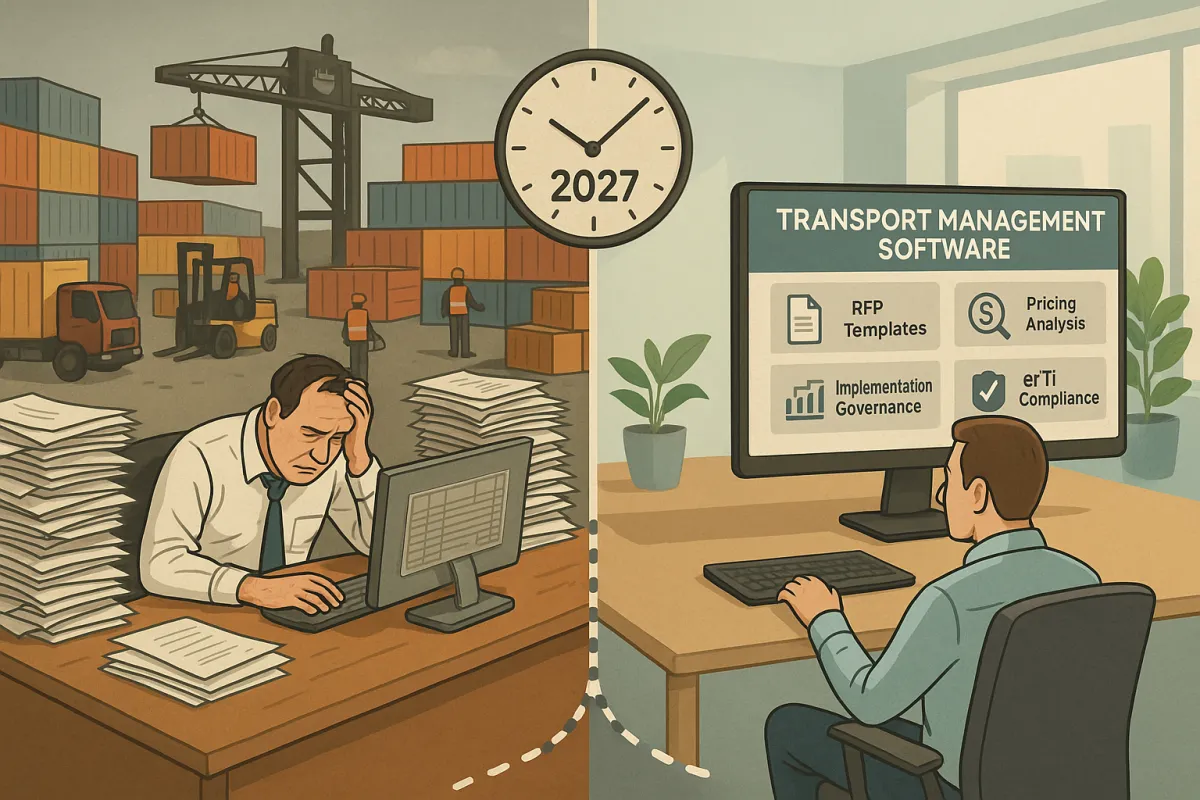
European procurement teams are staring down a procurement window that closes faster than most realize. Your transport management software integration strategy faces a perfect storm: shrinking vendor options, expanding regulatory requirements, and basic API integrations cost €5,000-€15,000, while complex ERP connections exceed €50,000. The procurement window for securing optimal TMS platforms before vendor consolidation eliminates choices and capacity shortages worsen cost structures runs through Q1 2026.
The numbers force hard decisions now. Plan for 15-20% budget increases in 2026-2027 if reactive, or 8-12% if proactive with proper contract protection. As of 9 July 2027, the eFTI Regulation will apply in full. Member State authorities must accept information shared electronically by operators via certified eFTI platforms. The regulatory deadline combines with vendor consolidation pressure to create the most complex TMS procurement environment European shippers have faced in decades.
The Architecture Decision That Determines Your Next Decade
API-first TMS architectures aren't just technical preferences - they're the foundation for regulatory compliance and competitive positioning through 2030. European manufacturers are discovering that a basic domestic shipper requires 10-15 integrations minimum, potentially totaling 1,000-1,500 hours of labor. The procurement window for optimal API-first TMS implementation is closing rapidly.
Traditional procurement processes break under current pressures. The traditional European freight procurement process consuming 18-28 hours per tender can now be compressed to 45 minutes through marketplace-connected TMS automation. This efficiency gain becomes mandatory when driver shortages and regulatory complexity multiply administrative overhead.
Real-time integration capabilities determine compliance readiness. This data will only be shared with authorities upon explicit inspection request, using unique access links in machine-readable formats such as QR codes. QR code generation and machine-readable format requirements become mandatory by July 2027. Your TMS must generate these automatically for every shipment across all transport modes.
API vs EDI Architecture: The Cost and Compliance Reality
The technical comparison reveals stark differences in both capability and cost structure. API-first platforms provide real-time rate access and high-fidelity updates, while legacy EDI systems struggle with the dynamic data requirements of modern European transport operations.
For most carriers and brokerages, TMS software costs land anywhere from about $50/month for basic tools to $2,000+/month for enterprise-grade automation. Costs can range from $0.40 to $5.00 per load depending on the tool and what counts as a "transaction." These baseline costs multiply when integration complexity enters the equation.
A simple rule: every place your team currently copy-pastes data is a future line item. Either you will pay for an integration, or you will pay in labor hours. This reality forces procurement teams to evaluate total cost of ownership beyond license fees.
Modern platforms like Oracle TM, SAP TM, MercuryGate, Descartes, and Cargoson offer varying levels of API maturity and European regulatory readiness. Each brings different consolidation risk profiles and integration architectures that impact long-term cost structures.
European Regulatory Compliance: The 2027 Deadline Framework
eFTI represents the most significant European transport digitalization mandate since the introduction of electronic customs systems. As of January 2026, eFTI platforms can start preparing for operations, while July 9, 2027 brings full mandatory compliance.
The regulatory timeline creates specific procurement leverage. Member States authorities may start accepting data stored on certified eFTI platforms for inspection from January 2026. Use this voluntary period for real-world testing and staff training.
Additional regulatory pressures compound compliance requirements. G2V2 smart tachograph obligations from July 2026 require integrated telematics data flows. ICS2 compliance failures carry penalties up to €5,000, making automated regulatory reporting through API connections a financial necessity rather than operational convenience.
Leading vendors already demonstrate regulatory readiness. Leading TMS providers like MercuryGate, Descartes, and Cargoson are already preparing eFTI-compatible solutions. The key is choosing platforms that combine regulatory compliance with transport optimization capabilities.
Vendor API Maturity Assessment: Beyond Feature Checklists
API-first architecture evaluation requires understanding the difference between proprietary connections and true RESTful API standards. Vendors offering standardized data formats and comprehensive third-party integration support demonstrate architectural maturity that survives market consolidation.
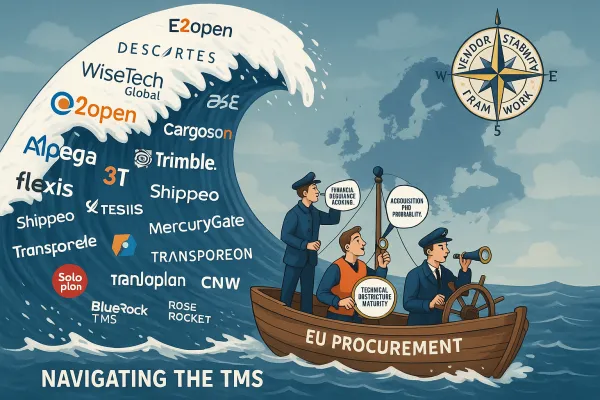
WiseTech's acquisition of E2open in 2025, Descartes' purchase of 3GTMS for $115 million in March 2025, and Körber's transformation of MercuryGate into Infios following their 2024 acquisition represent just the beginning of a fundamental market restructuring that's forcing European shippers to reconsider their entire TMS procurement strategy.
Documentation quality becomes critical during vendor transitions. Procurement teams should evaluate API documentation depth, deprecation policies, and third-party developer ecosystem health. These factors determine integration sustainability when ownership changes occur.
Current market leaders including nShift, Transporeon, Alpega, and Cargoson offer varying levels of consolidation resistance. Regional European specialists often maintain development focus on regulatory requirements, while global platforms may prioritize other geographic markets during integration activities.
Total Cost of Ownership Modeling: The Hidden Integration Reality
The sticker price is only 20-25% of total cost of ownership. Hidden costs include implementation services, carrier connectivity, training, and ongoing maintenance. This reality fundamentally changes procurement evaluation criteria.
In the USA, API integration cost ranges from $10,000 to $150,000 or more. This wide gap depends entirely on the complexity of the project and the infrastructure requirements. European operations face additional complexity through cross-border requirements and varying national regulations.
Carrier connectivity represents a significant ongoing expense. Integration complexity: Connecting your TMS to ELDs, EDI (Electronic Data Interchange), accounting tools (like QuickBooks), or a customer portal can trigger setup fees, ongoing API charges, or both.
A 3-Year Total Cost of Ownership (TCO) calculation should include license fees (20-25% of TCO), implementation, integration, training, and ongoing support. For large fleets (100+ vehicles), subscription costs can exceed $30,000-$40,000 annually, making custom TMS a cheaper option after three years.
Cloud TMS pricing models range from $1-4 per load versus licensed upfront costs. Emergency carrier onboarding during capacity shortages can trigger premium integration fees, making vendor ecosystem breadth a direct cost factor during peak seasons or disruptions.
Implementation Timeline and Risk Management Framework
Plan for 8–12 months to implement properly—not the "weeks" you'll hear in sales calls. Cloud implementations can compress to 8 weeks for basic configurations, but European complexity typically requires 6-18 month timelines for full regulatory compliance and carrier integration.
Regulatory deadline pressure intensifies implementation risks. Start of application of the new version (v3) of ICS2 messages on 3 February 2026, and decommissioning of older version (v2) means your integration must handle messaging format updates automatically - not through manual system adjustments.
Phased rollout strategies help manage risk during market volatility. Starting with pilot implementations in single countries allows testing integration patterns before scaling across European operations. This approach provides flexibility when vendor consolidation creates support disruptions.
Platform options including Oracle, SAP, Descartes, and Cargoson offer different implementation support levels and risk profiles during deployment. Regional specialists often provide more focused implementation support for European compliance requirements.
Contract Negotiation and Vendor Protection Framework
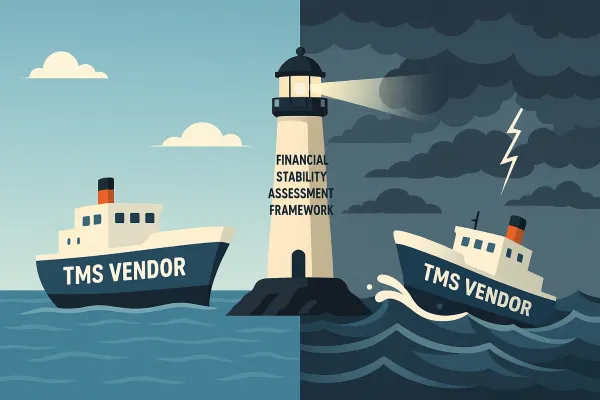
Acquisition-resistant contract terms protect against integration disruptions when vendor ownership changes. Performance benchmarks, compliance guarantees, and alternative solution provisions create downside protection during market consolidation.
API documentation and deprecation protection clauses ensure integration stability. Contracts should specify minimum API documentation standards, advance notice requirements for deprecation, and transition support obligations during ownership changes.
Price protection during vendor transitions prevents opportunistic increases following acquisitions. Multi-year pricing locks with defined escalation caps protect budget planning during market instability.
Alternative solution provisions create exit strategies if integration capabilities deteriorate post-acquisition. These clauses should specify data export requirements, integration transfer assistance, and competitive vendor introduction rights.
Making the Architecture Decision: Your 2026 Action Framework
The decision matrix balances immediate operational needs against long-term regulatory compliance and competitive positioning. API-first approaches require higher upfront investment but provide flexibility for unknown future requirements. Hybrid approaches can bridge legacy systems while building modern capabilities.
The procurement window for securing optimal TMS platforms before vendor consolidation eliminates choices and capacity shortages worsen cost structures runs through Q1 2026. Organizations delaying decisions face reduced vendor choice and increased implementation timelines as regulatory deadlines approach.
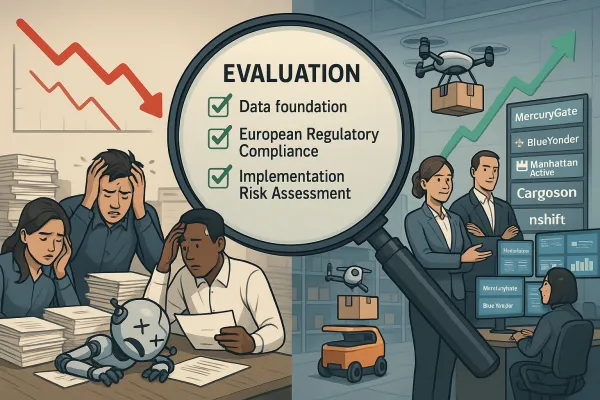
Your procurement action plan should prioritize regulatory compliance readiness over feature completeness. This means evaluating vendors like Cargoson, Manhattan Active TMS, Blue Yonder, and Oracle TM based on their demonstrated regulatory compliance capabilities, not just their routing algorithms or carrier connectivity.
Long-term competitive advantages emerge from architectural decisions made today. The introduction of Electronic Freight Transport Information could save the EU transport and logistics sector up to €1 billion per year. Over 20 years, EUR 27 billion could be saved in the next 20 years. Organizations implementing API-first TMS architectures position themselves to capture these efficiency gains while competitors struggle with compliance requirements.
Consider including Cargoson alongside established enterprise options in your final evaluation set. The combination of regulatory readiness, European market focus, and modern API architecture provides acquisition-resistant capabilities during current market volatility.