TMS RFP Template: The European Procurement Framework That Cuts Vendor Selection Time by 60%

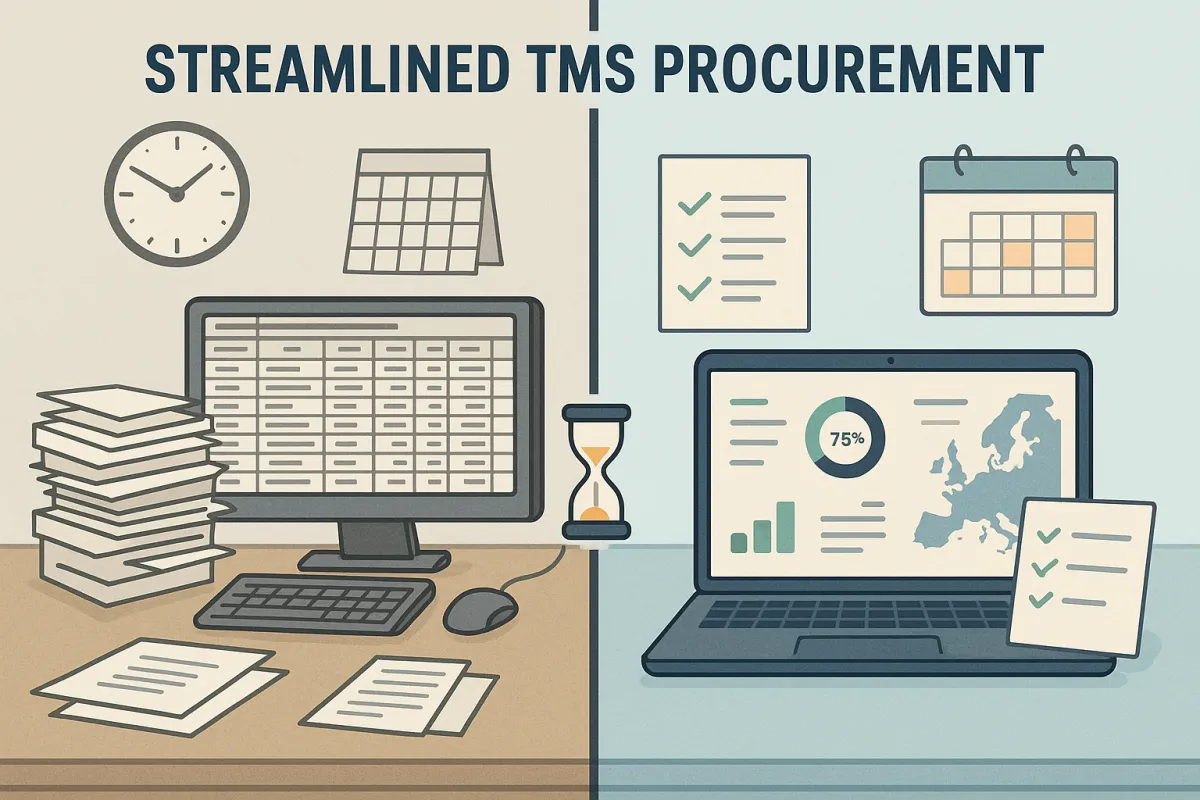
European procurement teams waste 12 months on TMS vendor selection that could conclude in six. The problem isn't insufficient diligence—it's using the wrong framework. A German automotive parts manufacturer learned this lesson the expensive way, spending €800,000 implementing a North American-focused TMS that couldn't handle their multi-modal European operations.
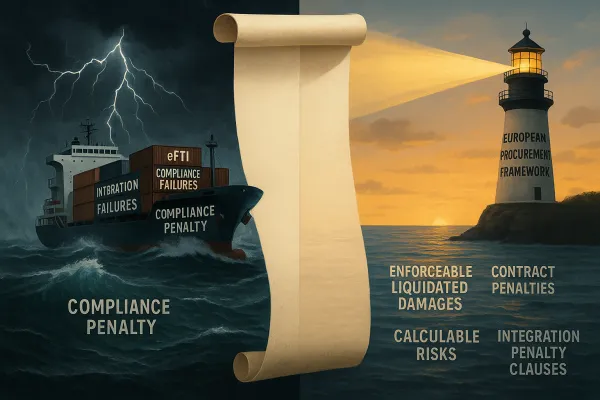
This TMS RFP template addresses 2025 market realities: eFTI compliance requirements, exploding vendor options, and procurement cycles that drag on without delivering better outcomes. Based on analysis of 40+ European TMS selections, it incorporates proven evaluation frameworks that cut selection time by 60% while improving vendor fit.
Why Most TMS RFP Processes Fail European Buyers
The traditional approach creates analysis paralysis. You evaluate 15 vendors across 200+ criteria, conduct three rounds of demos, and spend months on reference calls. Meanwhile, your current logistics costs keep climbing, and carrier relationships deteriorate from manual processes.
Market research shows the TMS landscape expanding four times larger by 2025, but most European buyers still use procurement frameworks designed for the 2015 vendor ecosystem. They evaluate established enterprise players like SAP and Manhattan against newer entrants like Cargoson, MercuryGate, and Descartes using identical criteria.
The disconnect? Different TMS categories require different evaluation approaches. Cloud-native solutions like Cargoson or Blue Yonder deploy faster but may lack some enterprise integrations. Legacy systems offer deeper customization but carry higher implementation risk. Your RFP framework needs to weight these trade-offs based on your specific requirements, not generic scorecards.
The 6 Critical Metrics Every European TMS RFP Must Include
Effective TMS evaluation boils down to six key performance indicators that predict long-term success. Most RFPs bury these metrics in 40-page requirements documents, but leading procurement teams front-load them as pass/fail criteria.
Carrier Connectivity & Integration Depth
European operations demand tight carrier integration across 27 countries with varying documentation requirements. Best-in-class platforms onboard new carriers in days, not months. Industry data shows agile cloud-native solutions like Cargoson and Transporeon typically achieve 6-12 week carrier onboarding cycles, while legacy enterprise systems average 6-12 months.
Your RFP should specify minimum carrier network coverage by country and modal requirements. A parcel-heavy shipper needs different connectivity than a B2B pallet operation. Don't accept vendor promises about "partnerships"—require proof of active API connections and transaction volumes.
Automation Percentage & Visibility Latency
Top-performing transport management systems automate 50-70% of routine transactions, with leading platforms achieving sub-hour reporting latency on key milestones. Manual exception handling drops to under 15% for well-configured implementations.
Your template should define specific automation scenarios: automatic carrier selection, rate shopping frequency, shipment tracking updates, and invoice matching capabilities. Vendors like Manhattan Active and Cargoson excel in different automation areas—your RFP needs to weight these based on operational priorities.
Total Cost of Ownership Modeling
TMS implementation costs range from €30,000 for basic cloud solutions to €900,000 for enterprise rollouts. But recurring costs matter more—typically linked to shipment volumes and spread over 10+ years. License-based models from SAP or Oracle provide cost predictability but may not scale with business growth. Transaction-based pricing from newer entrants offers flexibility but creates budget uncertainty during volume spikes.
Build 5-year TCO scenarios into your evaluation framework, including hidden costs like data migration, carrier integration fees, and ongoing customization requirements.
European Regulatory Compliance Requirements for TMS RFPs
The eFTI Regulation transforms TMS selection criteria starting January 2025. Full application begins July 2027, but procurement teams need eFTI-compatible solutions now to avoid compliance gaps.
Technical requirements include unique access links in machine-readable formats like QR codes for authority inspections. Your TMS must generate these automatically for cross-border shipments, maintain audit trails, and integrate with national eFTI systems across member states.
Leading providers like MercuryGate, Descartes, and Cargoson are preparing eFTI-compatible solutions, but implementation approaches vary. Cloud-native platforms typically adapt faster to regulatory changes, while enterprise systems may require custom development. Your RFP should explicitly address eFTI roadmaps and compliance timelines.
GDPR data residency requirements add another compliance layer. Specify whether your TMS data must remain within EU borders—this eliminates some North American-hosted solutions or requires specific deployment configurations.
Downloadable RFP Template Structure & Components
This transportation management system evaluation framework contains 268 distinct selection criteria covering functional, technical, and commercial requirements. Unlike generic templates that treat all TMS implementations identically, this version adapts to European market realities and shipper profiles.
The template structure includes five core sections:
Company Background & Requirements Definition: Your operational context, volume projections, and success criteria. Include current pain points, carrier relationships, and integration requirements with existing ERP systems.
Scope & Objectives: Specific business outcomes you expect from TMS implementation. Quantify targets like cost reduction percentages, process automation levels, and service quality improvements.
Technical Requirements: Infrastructure specifications, API capabilities, reporting functionality, and mobile access needs. European operations often require multi-language interfaces and local currency support.
Operational Requirements: Modal coverage, carrier network needs, visibility requirements, and exception management processes. Different shippers need different capabilities—express courier operations have different priorities than automotive parts distribution.
Commercial Terms & Implementation Approach: Pricing models, contract terms, implementation timelines, and ongoing support requirements. Include European-specific considerations like eFTI compliance and data residency.
Vendor Evaluation & Scoring Framework
Most procurement teams use equal weighting across all criteria, which dilutes focus on business-critical requirements. This scoring framework applies weighted evaluation based on operational priorities and shipper profiles.
For parcel-heavy operations, carrier connectivity and automation capabilities carry higher weights than warehouse management integration. B2B pallet shippers prioritize load optimization and multi-stop routing over parcel tracking granularity.
The evaluation matrix compares established enterprise vendors (SAP TM, Oracle OTM) against modern cloud platforms (Cargoson, Blue Yonder, Alpega) using relevant criteria for your operation. Leading companies achieve 4-6 week cycles for complex multi-modal tenders, compared to 8-12 weeks with manual processes.
Score vendors across four categories: functional fit (40% weighting), technical architecture (25%), commercial terms (20%), and implementation risk (15%). Adjust weightings based on your priorities, but maintain focus on measurable business outcomes rather than feature checklists.
Implementation Timeline & Success Metrics
Cloud TMS implementations often conclude within eight weeks, compared to 6-18 months for traditional enterprise systems. The difference lies in deployment approach, not vendor capability. Modern platforms like Cargoson and Manhattan Active use configuration-based setup rather than custom development.
Your RFP should specify implementation milestones and success criteria upfront. Define what "go-live" means for your operation—full carrier integration, specific automation levels, or user adoption thresholds. A European retail chain achieved 8% total cost savings while improving service quality, but only after establishing clear performance baselines and tracking mechanisms.
Focus on total cost of ownership rather than just rate reductions. TMS value comes from process efficiency, improved visibility, and better decision-making capabilities. These benefits compound over time but require proper measurement frameworks from day one.
Download the complete RFP template and scoring matrices to begin your vendor evaluation process. The framework adapts to different shipper profiles while maintaining focus on European regulatory requirements and 2025 market realities. Your transport management software procurement doesn't need to consume 18 months when six months delivers better results.