
Agentic AI TMS Procurement Reality Check: How European Buyers Can Evaluate Autonomous Transport Platforms Without Joining the 76% Implementation Failure Rate

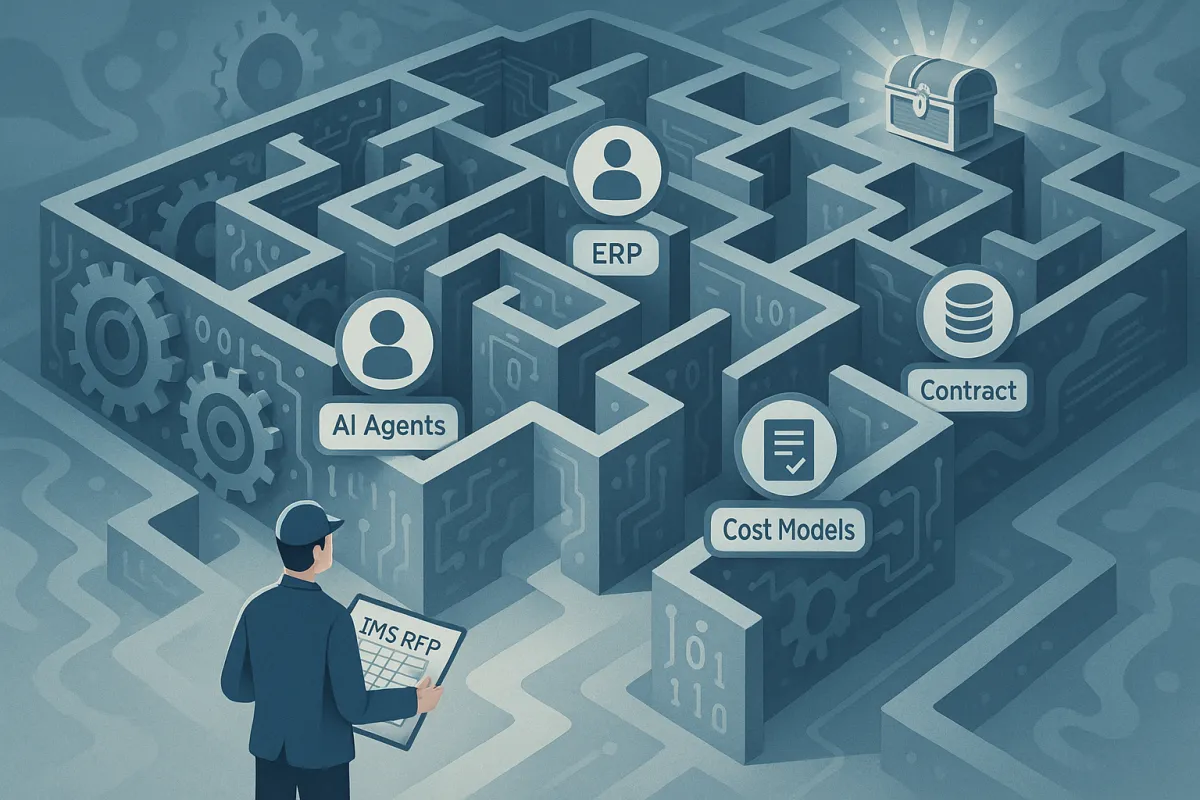
European procurement teams are discovering that agentic AI implementation success depends more on avoiding common pitfalls than chasing the latest features. While 79% of organizations have adopted AI agents to some extent, the sobering reality hits when you examine the numbers. Gartner predicts over 40% of agentic AI projects will be canceled by end of 2027, while seventy-six percent of logistics transformations never fully succeed, failing to meet critical budget, timeline or KPI metrics.
What distinguishes successful autonomous transport management system deployments from the failures? The organizations that avoid the 76% failure rate understand that agentic AI represents a fundamental shift from reactive reporting tools to proactive operational partners that execute decisions autonomously. Traditional TMS platforms analyze data and suggest actions. Agentic systems detect exceptions, evaluate options, select optimal solutions, execute through downstream systems, and notify stakeholders without manual intervention.
Your procurement window is closing. By 2028, 33% of enterprise software applications will include agentic AI, enabling 15% of day-to-day work decisions to be made autonomously, creating opportunity for the 24% who succeed versus the majority who fail.
Why Traditional TMS Evaluation Frameworks Fail for Agentic AI
Traditional software RFPs assume deterministic features and clear deliverables. AI breaks these assumptions with probabilistic outputs, making feature checklists inadequate for evaluation. As agentic AI moves from pilots to production, the most important shifts aren't about new capabilities, but about how responsibility, control, and workflow ownership are designed.
Current evaluation frameworks privilege narrow technical metrics while neglecting human-centered, safety, and economic assessments critical to real-world success. While 30% of surveyed organizations are exploring agentic options and 38% are piloting solutions, only 14% have solutions that are ready to be deployed and a mere 11% are actively using these systems in production.
The procurement reality? 42% of organizations report they are still developing their agentic strategy road map, with 35% having no formal strategy at all. Legacy system integration represents a fundamental obstacle, as traditional enterprise systems weren't designed for agentic interactions.
Consider Trimble's next-generation cloud-native TMS with embedded AI agents for order intake and invoicing automation, Oracle TM's AI-powered optimization modules, or SAP TM's predictive analytics capabilities. European alternatives like Cargoson provide specialized regional functionality with lower integration complexity for mid-market shippers.
The €800K+ Hidden Cost Framework European Buyers Must Address
Your data readiness assessment becomes critical. Can your systems provide the clean, structured data that AI agents require? European operations typically involve multiple ERP systems, varied carrier connectivity protocols, and complex master data relationships.
ERP integration represents the most critical technical dependency. Agents that cannot read from and write to SAP, Oracle, or other enterprise systems in real-time remain limited to insights rather than execution. Without direct purchase order creation, invoice validation, and shipment status updates, agentic systems deliver recommendations instead of autonomous decisions.
The license is typically only about 20–25% of total cost; the rest hides in integration, add-on modules, and disruption. Implementation typically adds 40-60% to the visible cost over the first two years. TMS implementation usually takes 1-2 months for smaller shippers and 3-6 months for larger networks. European operations typically fall between these ranges due to cross-border complexity.
Per-shipment pricing aligns cost to throughput but creates a risk most procurement teams underestimate: cost spikes during peak seasons when shipment volumes surge 30-50% above baseline. Factor this volatility into your budget modeling when evaluating vendors like Oracle TM, SAP TM, nShift, Alpega, and Cargoson for European operations.
Contract Protection Clauses for Agentic AI TMS Procurement
IP protection variations matter. Some vendors like Google, Microsoft, IBM provide contractual protection against AI-generated output claims, others don't. This becomes critical for customer-facing workflows where agents generate pricing quotes, delivery commitments, or carrier instructions.
Embedded guardrails must define roles, approvals, and thresholds to minimize risk. Can agents negotiate rates up to specific thresholds? When do cost overruns trigger human intervention? Decision boundaries and escalation protocols prevent the operational chaos that destroys 76% of implementations.
The European Procurement Scorecard That Prevents Implementation Disasters
Start with pilot programs: bounded scope, single workflow, clear success criteria, measurable ROI rather than full-scale transformation. One of the most practical agentic AI trends for 2026 is the move from single-step automation to systems that manage entire workflows. Instead of completing one task and stopping, agentic systems maintain context, monitor progress, and decide what to do next.
Evaluate vendors through composite scores: integration speed, data accuracy, security validation, pricing efficiency. Three emerging categories define the market: global mega-vendors (Oracle TM, SAP TM, E2open/WiseTech), European specialists (Alpega, nShift, Transporeon), and European-native solutions like Cargoson that balance local expertise with modern architecture.
Mathematical vendor scoring prevents bias. Weight integration capabilities (30%), European regulatory compliance (25%), pricing transparency (20%), and implementation track record (25%) to build objective evaluation frameworks.
Regulatory Compliance Integration Requirements for 2026-2027
Regulatory complexity demands immediate attention. January 2026: eFTI platforms and service providers can start preparing for operations, with Member States authorities potentially starting to accept data stored on certified eFTI platforms for inspection. From July 1, 2026, vans weighing 2.5-3.5 tons performing international transport of goods will be subject to the obligation to use second-generation smart tachographs (G2V2).
European regulatory timelines provide natural implementation phases: core functionality validation in Q2-Q3 2025, eFTI readiness by January 2026, G2V2 integration by July 2026. Use these deadlines for phased deployment rather than attempting simultaneous compliance across all requirements.
Budget planning for European implementations should account for regulatory compliance costs. Plan for 15-20% budget increases in 2026-2027 if reactive, or 8-12% if proactive with proper contract protection.
Pricing Models and Negotiation Strategies for Agentic AI TMS
Hybrid pricing emerges as the dominant model: base subscription plus performance elements. In 2026, AI automation and AI agents are increasingly influencing TMS pricing strategies. Expect to see more dynamic pricing models that adjust in real-time based on demand, competition, and customer behavior.
Typical structures include "$5,000/month for agent including 1,000 tasks, then $2 per additional task." Per-load pricing commonly runs roughly $0.40 to $5.00 per load, depending on what counts as a transaction. A good "rule of thumb" for a top tier cloud TMS is anywhere from $1.00 to $4.00 a shipment. This fee is dependent on the total number of shipments moved a month.
Dynamic pricing APIs allow agents to evaluate volume discounts, compare competitor pricing, and autonomously commit to usage-based contracts within predefined parameters. Bill shock prevention and overage tracking become proof-of-concept opportunities for tier upgrades.
Hybrid pricing models are gaining momentum, combining subscription and usage-based components. This matches European operations where seasonal volumes create unpredictable transaction costs under pure usage models.
Implementation Success Framework: Avoiding the 76% Failure Rate
Success differentiation starts with understanding agentic AI as a fundamental operational shift. Instead of relying on periodic planning cycles and manual escalation, agentic systems sense changing conditions, determine optimal responses within defined guardrails, and act autonomously.
In 2026, experimentation gives way to execution; agentic systems move from pilot to mainstream production. Your implementation timeline should align with this industry trajectory while maintaining the careful governance approach that separates successful deployments from the 76% that fail to meet objectives.
Structure workflows with escalation paths and human checkpoints. AI audit teams enable continuous testing and improvement. Most organizations will deploy agentic AI with clear limits, using checkpoints, escalation paths, and human oversight to balance efficiency with control.
European vendors like Cargoson, Alpega, and nShift often demonstrate better understanding of regional compliance requirements compared to global platforms adapting American-designed systems. This regulatory focus provides operational advantages during the 2026-2027 compliance convergence.
Start your evaluation now, but avoid the rush to deploy everything simultaneously. This phased approach reduces risk while ensuring your organization benefits from agentic AI capabilities without joining the majority of implementations that fail to deliver their promised value.
The procurement window closes by Q1 2026, after which regulatory pressure forces decisions under unfavorable terms. European procurement teams who establish governance frameworks, vendor partnerships, and compliance roadmaps now position themselves for sustainable competitive advantages while the majority struggle with implementation failures.