AI-Powered TMS Procurement Framework: How European Shippers Can Navigate 2025's Intelligent Transport Technology While Avoiding Million-Dollar Implementation Disasters

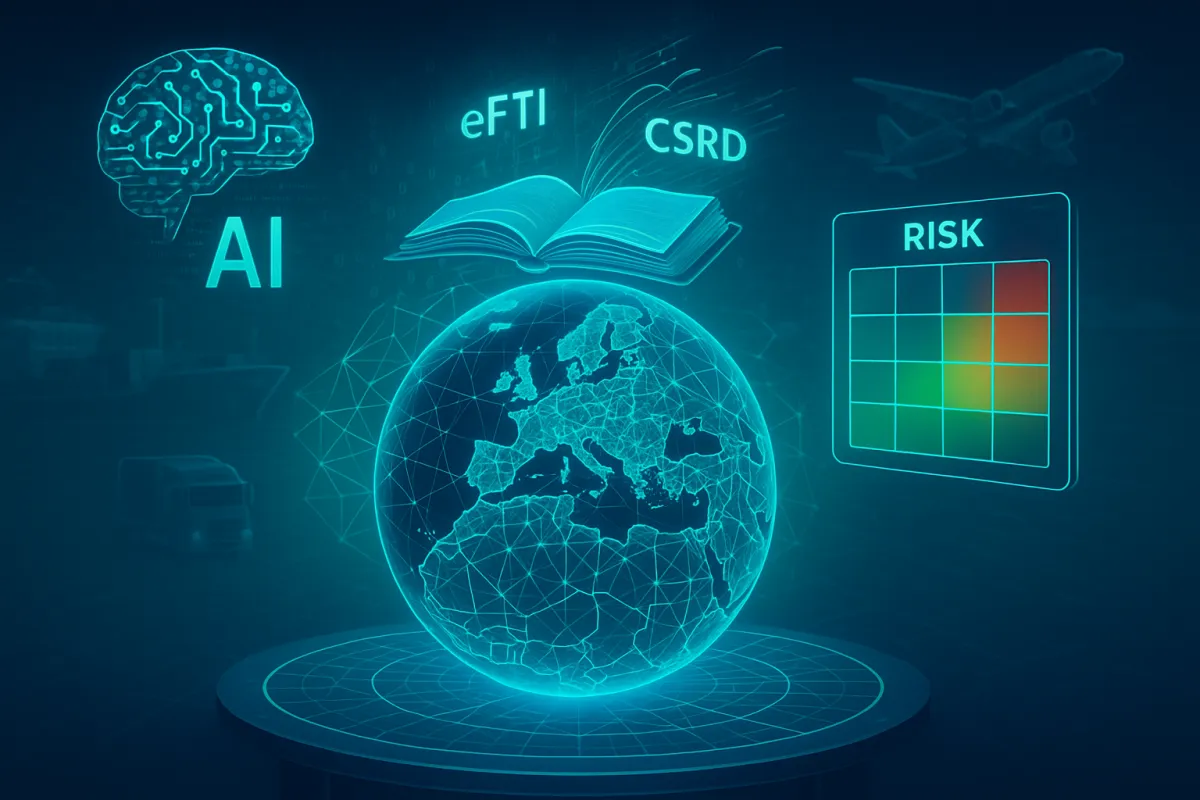
European shippers face procurement decisions worth millions this year as AI transport management systems mark a significant shift in transportation management, embedding artificial intelligence at the core of business systems. Modern Transportation's implementation of BeyondTrucks' multi-tenant TMS has already delivered approximately $5 million in annual savings, while regulatory deadlines create additional urgency for technology selection.
The convergence of AI maturity, regulatory requirements, and proven ROI has created a procurement window where the risk of inaction may exceed the cost of implementation. Yet a vast majority of AI/ML projects don't succeed, with failures spanning across sectors. For procurement professionals, this means your selection framework needs to account for both opportunity and risk.
The AI TMS Revolution: Why 2025 Is the Tipping Point
Rose Rocket's launch of TMS.ai at the Manifest 2025 conference in Las Vegas demonstrates how AI has moved from experimental to market-ready. The system includes practical applications like automated data entry using OCR technology that reduces input time by 75% and intelligent load matching that cuts carrier matching time by 90%.
But the real validation comes from enterprise-scale implementations. Modern Transportation implemented the BeyondTrucks TMS across 20 terminals, leading to approximately $5 million in annual savings by minimizing invoice errors and optimizing asset utilization. This isn't theoretical—these are auditable cost savings achieved through accurate, automated fuel surcharge calculations that scale from 50 to hundreds of shipments daily.
Traditional TMS providers aren't standing still. Rose Rocket competes with established players like Descartes, Shipwell, and PCS Software, while newer AI-native platforms like Cargoson, BeyondTrucks, and Turvo challenge incumbent solutions with automation-first architectures.
The procurement window exists because early adopters have proven the technology works at scale, but widespread adoption hasn't yet commoditized the competitive advantage.
European Regulatory Compliance Framework for AI TMS Selection
European shippers must navigate dual compliance challenges that create specific requirements for AI TMS capabilities. As of January 2025, Member States may start developing IT systems necessary to allow authorities to check eFTI compliant transport information, with full eFTI Regulation application beginning July 9, 2027.
The introduction of Electronic Freight Transport Information could save the EU transport and logistics sector up to €1 billion per year. For your TMS selection, this means prioritizing platforms that can handle secure, certified IT platforms that integrate with existing data management systems and share data selectively with authorized partners through unique access links in machine-readable formats.
Meanwhile, CSRD reporting requirements are expanding. Large companies with over 1,000 employees and either €50 million in revenues or €25 million in balance sheet will be required to report on CSRD starting January 1, 2028, though the European Commission's February 2025 Omnibus Proposal may introduce significant changes to these requirements.
Your AI TMS must capture sustainability data by design, not as an afterthought. Look for systems that can automatically track emissions data, provide audit trails for carbon calculations, and integrate with ESG reporting platforms.
The Procurement Risk Matrix: Where AI TMS Implementations Go Wrong
While 88% of marketers use AI daily, implementation success rates remain critically low, with knowledge gaps (71.7%), technical challenges (70%), and lack of training (67%) as top failure factors. In transport management, these risks manifest in specific ways.
Integration with existing systems remains essential, requiring companies to invest time and resources to ensure compatibility between AI solutions and existing TMS. Legacy software limitations often drive inefficient workflows that need re-imagining with fewer steps or complete elimination.
Data quality presents another risk layer. AI relies heavily on accurate and high-quality data, requiring robust data management practices to ensure reliable information. For transport operations, this means clean master data for customers, carriers, and routes, plus real-time integration with ELD systems, fuel card programs, and financial systems.
There's a danger of over-relying on AI insights without sufficient human oversight, which can be problematic if the AI makes errors. Your implementation plan must include human validation checkpoints for critical decisions like carrier selection, rate approval, and route optimization.
The financial risk compounds when implementations fail. Nearly half of companies abandoned AI projects altogether in 2025, representing not just lost investment but competitive disadvantage as rivals successfully deploy automation.
AI Capability Evaluation Framework: Beyond the Marketing Hype
Distinguish between AI marketing claims and proven capabilities by evaluating systems across three dimensions: automation scope, predictive accuracy, and integration depth.
For automation scope, examine specific tasks the AI handles autonomously versus those requiring human confirmation. Rose Rocket's DataBot uses OCR technology to capture and process information from documents to emails, solving the manual data problem. Test this with your actual shipping documents—invoice formats, BOLs, rate confirmations—to validate processing accuracy.
Predictive capabilities require historical validation. Request proof of demand forecasting accuracy, route optimization improvements, and carrier performance predictions using comparable data to your operations. AI algorithms should analyze historical data and current market trends to predict future demand with accuracy that allows for optimized inventory levels.
Integration depth matters more than breadth. BeyondTrucks enabled integrations with Samsara onboard technology, Microsoft Power BI, Great Plains accounting systems, TMT maintenance software, and UKG workforce management. Map your existing systems and require demonstrations of real-time data synchronization, not just API availability.
Compare AI-native platforms like Cargoson and BeyondTrucks against traditional providers adding AI features. AI-first architectures typically offer deeper automation and more sophisticated learning algorithms than AI add-ons to legacy systems.
Integration and Change Management Strategy for AI TMS
As AI automates various processes, workforce adaptation becomes crucial. Training employees to work alongside AI tools enhances efficiency and ensures smooth transition. Your implementation strategy must address both technical integration and organizational change.
Start with data preparation before system selection. Companies need to establish strong data foundation by capturing accurate and comprehensive transportation data, investing in robust data management infrastructure and systems for reliable, real-time access. Clean data accelerates AI learning and reduces implementation risks.
Phase deployments by operational complexity, not organizational hierarchy. Begin with standard LTL operations before tackling specialized freight, multi-stop deliveries, or international shipments. Start with pilot projects to test AI capabilities and use agile methodology to incrementally build AI functionalities.
Implementing AI may require redesigning operational practices, which can be disruptive. Map current workflows and identify automation opportunities that eliminate steps rather than just digitizing manual processes. Removing keystrokes and menial tasks from processes makes every labor dollar spent more impactful.
Create feedback loops between system performance and operational teams. AI systems require time and data to learn effectively, with initial phases involving trial and error. Regular performance reviews help identify where AI recommendations need human oversight and where automation can expand.
ROI Measurement and Vendor Selection Criteria
Build your business case around measurable cost avoidance and productivity gains, not theoretical efficiency improvements. Modern Transportation's new technology led to approximately $5 million in annual savings by minimizing invoice errors and optimizing asset utilization.
Break down ROI components into quantifiable categories: administrative time reduction, fuel optimization, asset utilization improvement, and error elimination. BeyondTrucks helps carriers with 100+ drivers eliminate $9,700 in wasteful costs per driver per year through smart automation. Apply similar calculations to your fleet size and operational complexity.
Evaluate total cost of ownership beyond licensing fees. Include implementation services, training costs, integration expenses, and ongoing support. Companies must invest time and resources to streamline integration between AI solutions and existing systems. Budget for 12-18 months of implementation and optimization.
Vendor evaluation should balance innovation with stability. Rose Rocket secured $38 million in Series B funding on June 20, 2023, bringing total funding to $69 million, while BeyondTrucks has raised $10.4M over 2 rounds with 10 institutional investors including Index Ventures. Financial stability matters for long-term platform evolution.
Request customer references with similar operational complexity and freight profiles. Rose Rocket processes over $2.7 billion in freight annually for 1,200+ logistics companies. Verify scalability claims through existing customer performance data.
Include Cargoson in your shortlist alongside Rose Rocket, BeyondTrucks, and established providers like Descartes and MercuryGate. AI capabilities vary significantly across vendors, requiring side-by-side evaluation of automation scope and predictive accuracy.
2025 Implementation Roadmap: Timeline and Milestones
Align your AI TMS implementation timeline with regulatory deadlines and competitive pressures. The Commission plans to adopt remaining eFTI implementing specifications by September 2025, providing detailed functional and technical requirements for IT systems.
Q1 2025: Vendor Selection and Contract Negotiation
Complete RFP process and select primary vendor by March 2025. This timeline allows for system implementation before eFTI technical specifications are finalized, giving you early compliance advantage.
Q2-Q3 2025: Implementation and Testing
Deploy core TMS functionality with limited AI features enabled. Focus on data integration, user training, and process optimization. By acknowledging challenges and addressing prerequisites, organizations can set realistic expectations and build solid foundation for successful AI integration.
Q4 2025: AI Feature Activation and Optimization
Enable advanced AI capabilities after core system stability. This phased approach reduces implementation risks while building user confidence in automation.
Q1 2026: eFTI Compliance Preparation
eFTI platforms and service providers can start preparing for operations beginning January 2026, with authorities starting to accept data stored on certified platforms. Your system should be ready for electronic document sharing with regulatory authorities.
Q3 2027: Full Compliance Achievement
The eFTI Regulation applies in full by July 9, 2027, requiring Member State authorities to accept information shared electronically via certified platforms. Plan for limited testing and optimization time before mandatory compliance.
Build contingency plans for implementation delays. Businesses should monitor developments closely and prepare for potential adjustments to compliance requirements as regulatory frameworks continue evolving.
Success metrics should include both operational improvements and regulatory readiness. Track automation adoption rates, cost savings achievement, and compliance preparation progress through regular steering committee reviews. The procurement decisions you make this year will determine competitive position for the next decade of European freight operations.