TMS Budget Reality Check 2026: The European Procurement Framework That Prevents €500K+ Hidden Cost Disasters While Ensuring eFTI Compliance

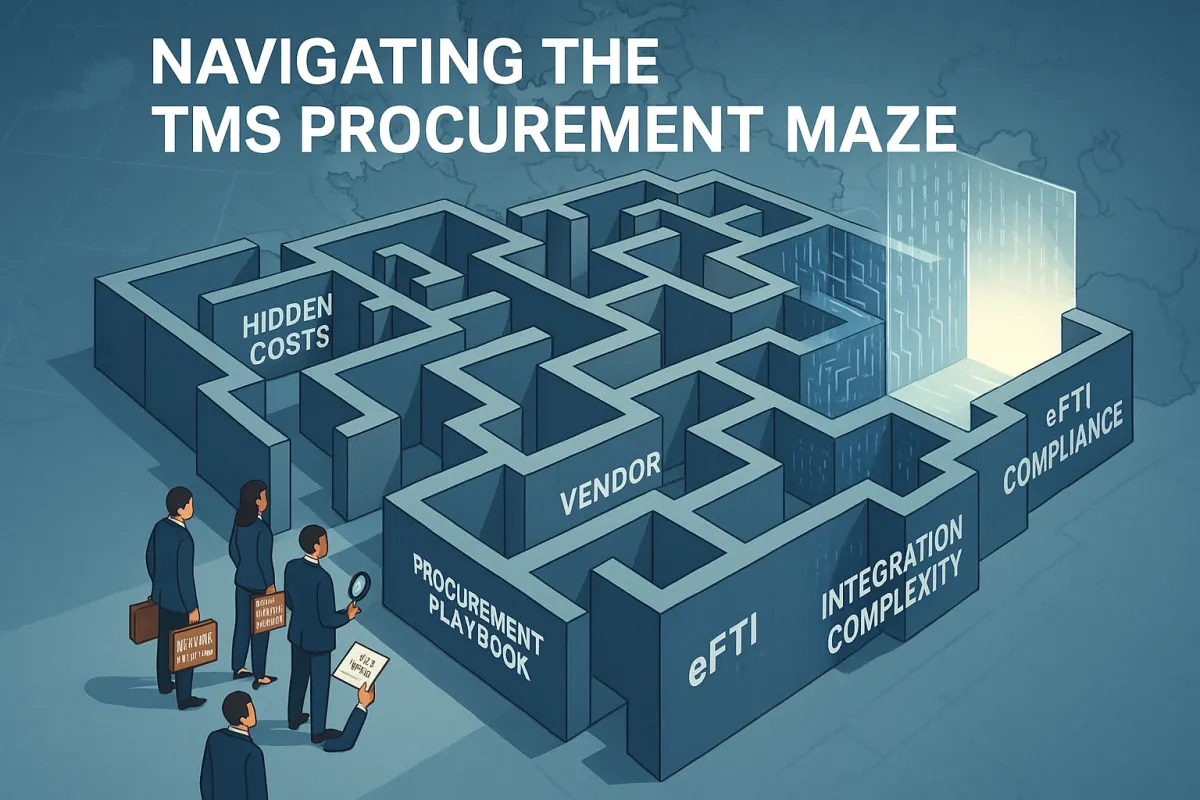
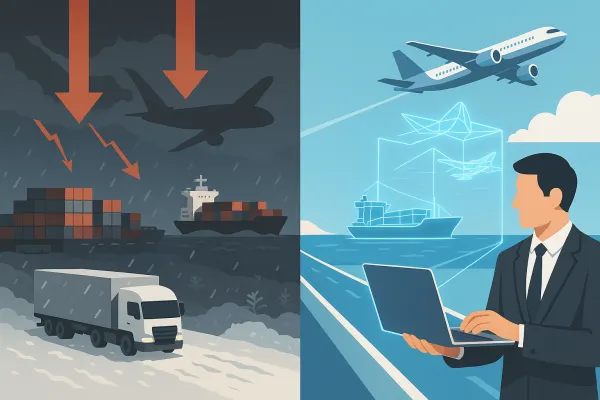
A German automotive parts manufacturer discovered their €800,000 TMS implementation mistake the hard way. Six months into deployment, they found their European carriers couldn't integrate without costly custom development work - turning their "smart procurement decision" into a complete platform re-implementation.
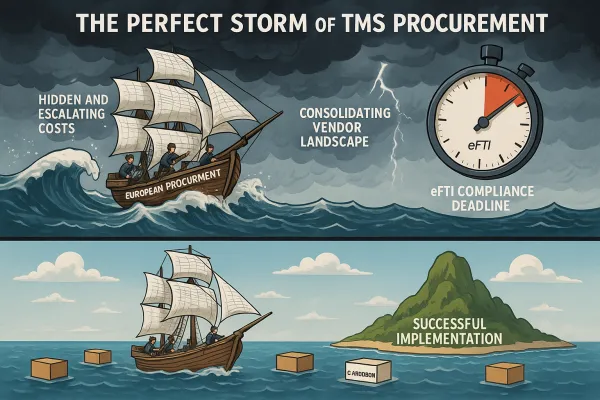
This story repeats across Europe as hidden costs in TMS procurement consistently add 25-30% more than initial estimates, turning what looked like smart investments into budget disasters. Meanwhile, eFTI platforms and service providers can start preparing for operations as of January 2026, with Member States authorities potentially starting to accept data stored on certified eFTI platforms for inspection. Procurement teams now face a double challenge: navigating unprecedented vendor consolidation while preparing for mandatory compliance costs that most budget frameworks completely ignore.
The €800K Wake-Up Call European Procurement Teams Can't Ignore
The numbers tell a stark story. WiseTech's acquisition of E2open in 2025, Descartes' purchase of 3GTMS for $115 million in March 2025, and Körber's transformation of MercuryGate into Infios following their 2024 acquisition represent just the beginning of a fundamental market restructuring that's forcing European shippers to reconsider their entire TMS procurement strategy.
What's driving procurement disasters? TMS implementation costs range from €30,000 to €900,000, depending on complexity and vendor approach. But here's what catches European shippers off-guard: recurring costs spread over 10+ years typically link directly to shipment volumes, while one-time implementation expenses hit immediately.
The vendor landscape reveals three distinct tiers emerging from consolidation: mega-vendors like global mega-vendors (Infios/MercuryGate, Descartes, SAP TM, Oracle TM, E2open/WiseTech), European specialists (Alpega, nShift, Transporeon/Trimble), and emerging European-native solutions (including Cargoson) that focus specifically on cross-border European operations.
Consider how acquisition timing affects your procurement strategy. Service levels often decline during the 12-18 months following acquisition as resources focus on technical integration rather than customer support. Product updates get delayed, and some functionality may be deprecated entirely if it conflicts with the acquiring company's roadmap. Pricing typically increases 18-24 months post-acquisition once integration costs are absorbed.
The eFTI Compliance Budget Impact No One's Calculating
European procurement teams face an additional compliance deadline that most budget frameworks haven't accounted for. As of 9 July 2027: The eFTI Regulation will apply in full. Member State authorities must accept information shared electronically by operators via certified eFTI platforms.
The phased implementation creates immediate procurement urgency. As of January 2026, eFTI platforms and service providers can start preparing for operations, with Member States authorities potentially starting to accept data stored on certified eFTI platforms for inspection from January 2026.
The financial impact extends beyond regulatory compliance. The introduction of Electronic Freight Transport Information could save the EU transport and logistics sector up to €1 billion per year. Over 20 years, EUR 27 billion could be saved in the next 20 years. However, procurement teams choosing platforms without native eFTI functionality face substantial integration costs.
QR code generation and machine-readable format requirements become mandatory by July 2027. Your TMS must generate these automatically for every shipment across all transport modes. Platforms requiring third-party eFTI integrations create additional vendor dependencies and recurring licensing costs.
Leading providers like Descartes, Cargoson, and Alpega are positioning their platforms with built-in eFTI capabilities, while others may require costly add-on solutions or complete re-platforming.
Hidden Cost Category 1: Integration Complexity
Integration expenses represent the largest budget variance for European implementations. Basic API integrations cost €5,000-€15,000, while complex ERP connections exceed €50,000. A basic domestic shipper requires 10-15 integrations minimum, potentially totaling 1,000-1,500 hours of labor. More complex operations may need 140+ integration objects.
The math becomes revealing for larger operations. For shippers with annual freight under management exceeding €250M, implementation costs often run 2-3x the subscription fees. This gap widens when European carriers require custom EDI development rather than using standardized APIs.
Carrier connectivity represents one of the largest hidden cost areas. Some TMS providers offer published APIs for carrier integration, but carriers may charge shippers for establishing these connections. While carriers can easily join platforms through portals, requesting completely new carrier API/EDI integrations is complex and costly - many providers don't build custom integrations themselves but provide standard EDI interfaces that carriers must implement.
Compare this to platforms with extensive pre-built networks. Alpega connects to 80,000+ European transport professionals, MercuryGate offers broad North American coverage, and Cargoson focuses on European API/EDI connections. The cost difference between pre-built versus custom integration can represent 40-60% of total implementation budgets.
Hidden Cost Category 2: Vendor Consolidation Risks
Recent mega-acquisitions create procurement risks that extend far beyond initial implementation. WiseTech Global's $2.1 billion acquisition of E2open has sent shockwaves through the European transportation management systems market, marking the most significant consolidation move in recent TMS history.
The pattern continues with systematic market consolidation. The $115 million acquisition of 3GTMS by Descartes Systems Group in March represents more than just another deal sheet headline. This marks Descartes' 32nd acquisition since 2016, and signals a fundamental shift in how procurement teams need to approach TMS vendor selection and contract negotiations across Europe.
Acquisition impacts create measurable business disruption. 66% of technology projects end in partial or total failure, with 17% of large IT projects threatening company existence. When your TMS vendor becomes an acquisition target, you inherit these integration risks without directly managing the project.
European shippers face unique challenges in this consolidated landscape. Regional specialists like Transporeon (Trimble), nShift, and independent European solutions such as Cargoson offer alternatives to mega-vendor dependence, but procurement teams must evaluate long-term stability versus feature completeness trade-offs.
The Complete European TMS Budget Framework [Downloadable Template]
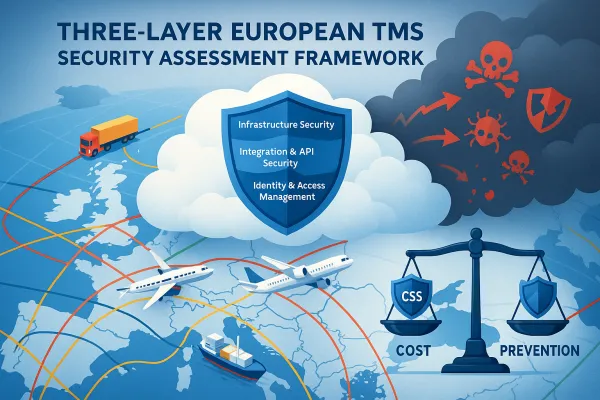
Building comprehensive TMS budgets requires accounting for six distinct cost categories that most procurement frameworks miss completely. Consider these TCO components: base licensing (20-30% of total), implementation services (25-40%), carrier integration (15-25%), customization and training (10-20%), and ongoing support (15-20%).
Your budget framework must include eFTI-specific line items. Platforms offering native compliance versus those requiring third-party integrations create vastly different cost structures over 5-year periods. Include separate calculations for QR code generation capabilities, platform certification costs, and ongoing regulatory update expenses.
Create vendor stability assessments alongside functionality evaluations. Smart procurement teams now evaluate vendor stability as rigorously as functionality fit. This means examining acquisition history, integration track records, and financial positioning that might make a vendor attractive to larger players.
Budget protection strategies become particularly important in the current consolidation environment. Include contract clauses protecting against acquisition-related service disruptions, pricing increases, and functionality deprecation. Consider multi-vendor strategies for critical capabilities rather than single-platform dependence.
Implementation & Integration (30-40% of total budget)
Professional services complexity varies dramatically based on vendor architecture and European operational requirements. Once a TMS opts, installation, training, reports, and notifications may cost you 25 - 30% more than initially estimated. You also need to take into account the cost of the TMS long-term operation.
Carrier connectivity costs scale with European network complexity. European shippers face unique challenges with cross-border carrier requirements. Most European shippers work with 20-30 regular carriers but could benefit from access to 200-300 qualified providers. The cost difference between platforms with extensive pre-built networks versus those requiring custom integrations is substantial.
Training and change management represent underestimated budget categories. It is undeniable that this phase takes you and your TMS partner a lot of time and effort. The more users, the more complex, the longer time, the higher cost. Hence, for ease of getting to know procedures, it is important to choose an easy-to-use software as well as make a detailed agreement with your TMS provider about this affair before using the software.
Ongoing Operations & Compliance (25-35%)
Annual maintenance costs embed hidden complexity in transaction-based pricing models. Traditional licensed TMS models charged around 20% of license fees for annual maintenance. Transaction-based systems embed these costs differently - sometimes invisibly. Companies face ongoing costs for system updates, troubleshooting, and technical support that accumulate over time. Cloud-based TMS vendors include these in transaction fees, but service levels vary significantly.
eFTI compliance creates new recurring expense categories that most budgets haven't accounted for. Platform certification fees, regulatory update costs, and QR code generation capabilities require separate line items in 5-year TCO models.
Performance monitoring and carrier network maintenance represent growing cost centers. As European carrier networks expand and cross-border requirements evolve, ongoing connectivity maintenance becomes a substantial operational expense.
Procurement Strategy for 2026's Consolidated Market
Market consolidation fundamentally changes procurement strategy requirements. The recommended approach shifts from comprehensive platform evaluation to phased implementation with multiple vendor relationships. Start with one major shipping lane, measure results over 6-9 months, then expand systematically.
Financial stability assessment frameworks become as important as functional requirements. Evaluate vendor acquisition history, revenue diversity, and European market commitment. Independent European providers like Cargoson, nShift, and Alpega offer different risk profiles compared to acquisition-target vendors or mega-platform subsidiaries.
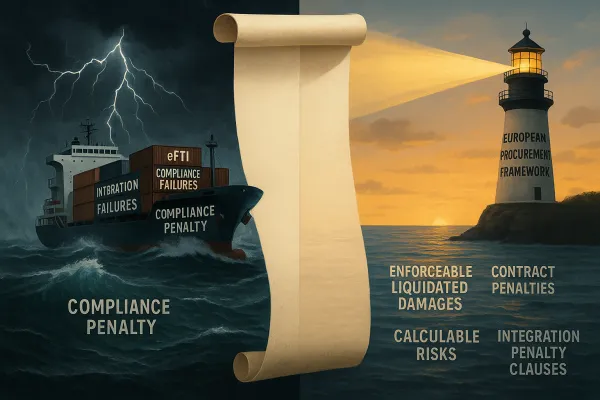
Negotiate protection against consolidation risks through specific contract terms. Include provisions for service level maintenance during acquisition periods, pricing protection against post-acquisition increases, and functionality preservation guarantees. Build exit strategies that don't require complete re-implementation.
Consider hybrid vendor strategies that reduce single-platform dependence. Core TMS functionality from stable European providers combined with specialized services for visibility, optimization, or compliance creates more resilient technology stacks while maintaining competitive negotiating positions.
The ROI Calculation That Actually Works
Traditional ROI calculations focus heavily on freight cost savings while missing administrative cost reduction opportunities. According to industry data, manual processes waste 15–20 hours per week on data entry, calls, and emails — nearly $50,000 annually for a mid-sized carrier.
Cash flow improvements from automation often exceed direct cost savings. Poor visibility delays payments by 30–45 days, tying up $250K–$375K in cash flow for a $2M company. When you're managing shipments with spreadsheets and phone calls, customers don't get the real-time updates they need to process payments quickly. Without digital proof-of-delivery and automated invoicing, your invoices sit in approval queues while your cash flow suffers.
Risk mitigation value requires quantification in European markets. eFTI compliance risk, carrier network disruption costs, and manual process error rates create measurable financial impacts that modern TMS platforms directly address.
Include competitive positioning benefits in ROI calculations. Without a TMS, you're competing with one hand tied behind your back. Shippers increasingly prefer carriers who can provide seamless digital experiences.
Your 5-year TCO analysis should weight vendor stability alongside functionality benefits. Account for potential re-implementation costs if your chosen vendor becomes an acquisition target, balanced against the operational benefits of proven European-focused platforms.
The question isn't whether you can afford comprehensive TMS budgeting - it's whether you can afford the €500K+ disasters that consistently result from underestimating hidden costs while ignoring vendor consolidation risks and eFTI compliance requirements.