TMS Contract Negotiations 2025: How European Shippers Turn eFTI and Smart Tachograph Deadlines Into Vendor Negotiation Leverage

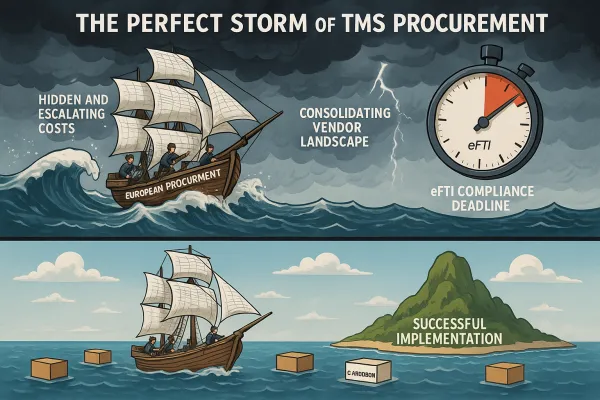
European shippers face a perfect storm: regulatory deadlines approaching, vendor consolidation accelerating, and TMS contracts up for renewal. Yet most procurement teams view these compliance requirements as cost burdens rather than negotiation weapons.
The reality? By 9 July 2027, the eFTI Regulation will apply in full, while starting 19 August 2025, all heavy-duty vehicles registered in the EU and operating in Member States other than their Member State of registration must be fitted with G2V2 devices. These aren't just compliance checkboxes – they're procurement leverage points that savvy buyers can exploit for better contract terms, protection against vendor lock-in, and maximum value from compliance investments.
The Regulatory Timeline That Changes Everything
The eFTI Regulation implementation timeline just got real. As of January 2025, Member States may start developing the IT systems necessary to allow authorities to check eFTI compliant transport information. It could save the EU transport and logistics sector up to €1 billion per year.
Meanwhile, the Smart Tachograph G2V2 rollout has created an immediate urgency. After years of phased implementation, the final deadline for retrofitting the smart tachograph version 2 (G2V2) into heavy-duty vehicles has now arrived. From 19 August 2025, every heavy-duty vehicle registered in the EU and operating across Member State borders must be equipped with a G2V2 unit.
The cost of reactive compliance planning is substantial. Many operators faced a race against time, hindered by supply shortages, workshop backlogs, and technical snags... Many operators underestimated the time needed for retrofits, and the industry experienced shortages of certified workshops and device stock.
For procurement teams, this creates a unique window. Vendors know you need compliance features, but they also need your commitment to justify their development investments. The difference between proactive and reactive positioning? Hundreds of thousands of euros in contract terms and pricing protection.
The Hidden Leverage European Shippers Miss
Most procurement teams approach regulatory compliance as a vendor-driven necessity. Turn this around. Vendors are equally dependent on compliance feature rollouts for revenue growth – and they're competing fiercely for market position ahead of these deadlines.
Consider the timeline pressure from the vendor perspective. By September 2025: The Commission plans to adopt the remaining eFTI implementing specifications. These will provide detailed functional and technical requirements for the IT systems and services to be used by businesses (eFTI platforms and eFTI service providers) and the rules for their certification.
This creates a procurement sweet spot. Vendors building eFTI compliance capabilities need reference customers and guaranteed volumes to justify their R&D investments. Those building Smart Tachograph integrations face similar pressures. Your commitment provides them certainty – but only if structured correctly.
A German automotive manufacturer learned this lesson the hard way. In early 2024, they signed a three-year TMS renewal without regulatory compliance pricing protection. When their vendor introduced eFTI compliance as a premium add-on module nine months later, the additional licensing costs reached €800,000 annually. The lesson? Lead negotiations with compliance requirements, not feature wish lists.
Contract Terms That Protect Against Post-Deadline Price Hikes
Vendor consolidation is reshaping contract risk profiles. The deal is the 32nd acquisition by Waterloo, Ontario-headquartered Descartes since 2016. Descartes Systems Group (NASDAQ: DSGX) has announced its acquisition of 3GTMS, a leading provider of cloud-based transportation management solutions. The deal, valued at approximately $115 million.
Post-acquisition pricing changes are common outcomes. When renewing products or introducing new options with existing contracts, be prepared for price hikes, licensing changes, costs out of line with other leading services, hidden costs and unanticipated service charges.
Essential contract clauses for regulatory compliance protection include:
- Regulatory Feature Inclusion: Specify that eFTI platform certification, Smart Tachograph G2V2 integration, and future EU transport digitalization requirements are included in base pricing without additional licensing fees.
- Performance-Based SLAs: Tie vendor payments to compliance feature delivery milestones. Include penalties for delays that could impact your regulatory deadlines.
- Acquisition Protection Clauses: Require 24-month advance notice of pricing changes following vendor acquisitions, with opt-out rights if increases exceed agreed thresholds.
- Data Portability Guarantees: Ensure compliance data can be exported in standard formats (eFTI-compliant XML, API access) within 30 days of contract termination.
When evaluating vendors, include established players like MercuryGate, Descartes, and Oracle TM alongside emerging specialists. Cargoson has positioned itself strongly in European compliance readiness, while SAP TM offers enterprise-grade integration capabilities. The key is ensuring your contract terms protect against post-selection pricing changes regardless of which vendor you choose.
The Compliance-First Negotiation Strategy
Traditional TMS negotiations start with functional requirements and work toward pricing. Flip this sequence. Lead with regulatory compliance timelines, then layer in operational features.
Member States authorities may start accepting data stored on certified eFTI platforms for inspection from January 2026. Use this voluntary period for real-world testing and staff training. This timeline creates negotiation leverage – vendors who can deliver compliant solutions early gain competitive advantage.
Structure your compliance-first approach around three negotiation pillars:
Certification Timeline Milestones: Use eFTI platform certification deadlines as contract delivery requirements. September 2025: The European Commission will finalise technical and functional requirements for IT systems and define the certification process for eFTI platforms and service providers. January 2026: eFTI platforms and service providers start preparing for operations, while national authorities may begin accepting digital freight data for inspections.
Implementation Support Requirements: Demand vendor-provided training and support for regulatory transitions. This isn't just nice-to-have – it's essential for avoiding compliance penalties. Include specific training hours and support availability in contract terms.
Benchmark-Based Pricing: Compare compliance feature costs across vendors including Transporeon, Blue Yonder, Cargoson, and nShift. Vendors often inflate compliance pricing when it's treated as an add-on rather than core functionality.
The negotiation power comes from timing. Vendors investing in compliance capabilities need early adopter customers to validate their solutions before the July 2027 deadline. Your commitment provides that validation – but structure it to your advantage.
Multi-Vendor Risk Management Framework
Market consolidation is accelerating. The deal is the 32nd acquisition by Waterloo, Ontario-headquartered Descartes since 2016. This represents fundamental shifts in vendor relationships and contract risk profiles that procurement teams must address proactively.
Contract terms that protect against vendor acquisition impacts include:
Service Level Continuity Clauses: Require maintaining current service levels for 24 months post-acquisition, with penalties for degradation. In other cases, service levels may drop, product updates may be delayed and certain offerings may be merged with others, or perhaps sunsetted. Even positive changes may come with a higher price tag.
Feature Deprecation Protection: Prevent vendors from discontinuing compliance-critical features without providing equivalent alternatives at no additional cost. This protects against post-acquisition product rationalization decisions.
Pricing Stability Guarantees: Lock in pricing for regulatory compliance features with inflation-only adjustments. Specify that acquisition-driven cost restructuring cannot increase your fees beyond agreed annual escalation limits.
Maintain qualified backup vendors throughout your contract period. The competitive landscape includes established players like Manhattan Active and FreightPOP alongside specialists like Alpega and Cargoson. The key is ensuring rapid vendor transitions remain possible without losing compliance capabilities.
Your backup vendor qualification should include pre-negotiated implementation timelines, data migration support, and compliance feature equivalency. This isn't paranoia – it's prudent risk management in a consolidating market.
Timeline-Based Negotiation Calendar for 2025-2027
Q1 2025: Position for Leverage Current market positioning favors buyers who can commit to compliance-ready solutions. Vendors need reference customers for their eFTI and Smart Tachograph integrations. Use this timing to negotiate better base terms before competition intensifies.
2026: Light Commercial Vehicle Preparation From 1 July 2026, road freight vehicles weighing between 2.5 and 3.5 tonnes engaged in international transport will be required to have G2V2 tachographs installed. This group will also need to comply with EU driving and rest time rules, the Lex specialis on driver posting, and existing cabotage regulations. Begin contract discussions for this expansion well ahead of the deadline.
Pre-July 2027: Final eFTI Positioning 9 July 2027 · The eFTI Regulation will apply in full. Member State authorities must accept information shared electronically by operators via certified eFTI platforms. Contract renewals in early 2027 should focus on post-compliance optimization and performance-based pricing adjustments.
Budget planning around these timelines requires understanding both direct compliance costs and indirect operational impacts. Plan for 15-20% budget increases in 2026-2027 if reactive, or 8-12% if proactive with proper contract protection.
Red Flags and Contract Killer Clauses to Avoid
Certain contract terms shift compliance risk entirely to shippers while protecting vendors from implementation challenges. Avoid these contract killers:
Regulatory Change Exclusions: Clauses that exclude vendor responsibility for regulatory compliance updates. Any TMS contract signed now should include eFTI and Smart Tachograph compliance as baseline requirements, not optional upgrades.
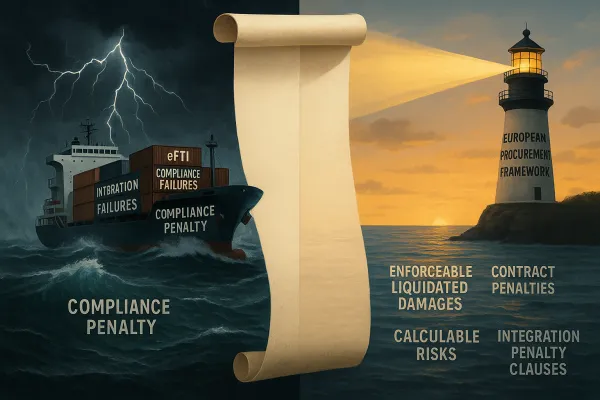
Implementation Delay Penalties: Terms that penalize you for implementation delays without corresponding vendor penalties for delivery failures. Many operators faced a race against time, hindered by supply shortages, workshop backlogs, and technical snags. Your contract should account for these realities.
Feature Sunset Rights: Vendor rights to discontinue features with minimal notice periods. This becomes particularly dangerous in post-acquisition scenarios where product rationalization is common.
Usage-Based Compliance Pricing: Per-transaction fees for compliance features like eFTI submissions or G2V2 data processing. These costs compound rapidly and create budget unpredictability.
A Netherlands-based logistics provider avoided a €400,000 annual cost increase by negotiating compliance feature inclusion in their 2024 renewal. Their contract specified that all EU regulatory requirements through 2028 were included in base pricing, with vendor penalties for non-delivery. When eFTI compliance became available in Q3 2026, they activated it without additional fees while competitors paid premium pricing.
The lesson? Structure regulatory compliance as vendor obligation, not buyer option. Your leverage is strongest when vendors need your commitment to justify their development investments. Use this timing to secure better terms, stronger protections, and predictable costs through the compliance transition period.
Success requires treating regulatory deadlines not as compliance burdens, but as procurement opportunities. The vendors who understand this dynamic – and the buyers who leverage it effectively – will emerge stronger from the regulatory transition ahead.