TMS Migration Disaster Prevention: The European Risk Assessment Framework That Saves Companies €800K+ in Failed Implementations

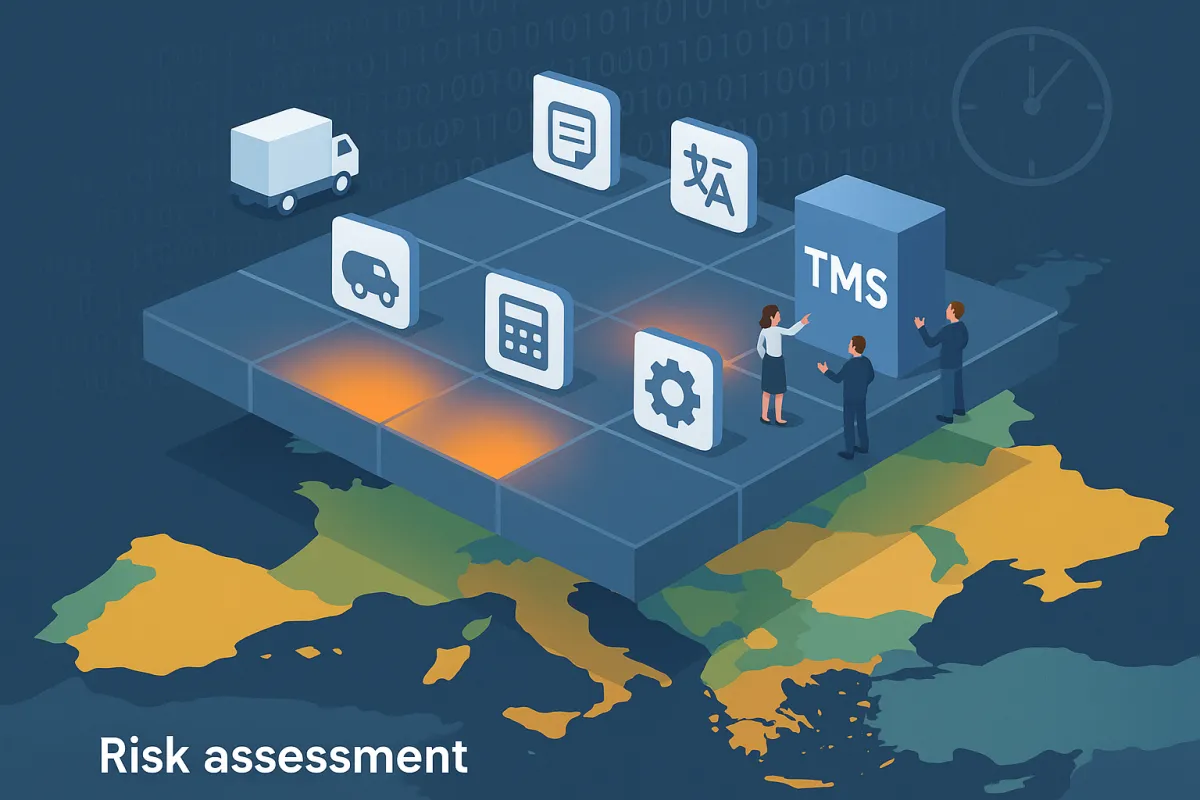
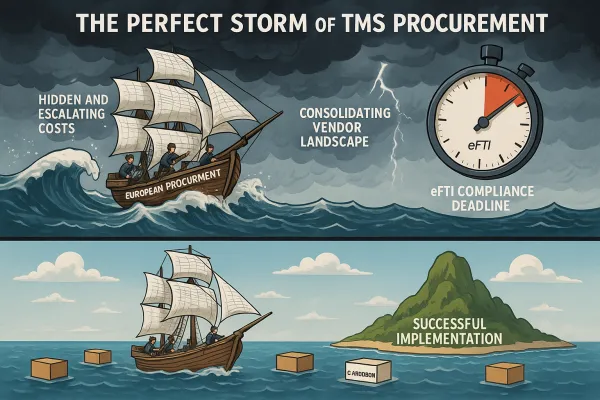
A German automotive parts manufacturer discovered six months into their TMS implementation that they'd made an €800,000 mistake. Six months in, €800,000 spent, and they realized their new system couldn't handle their complex carrier network across 12 countries. They chose a North American-focused platform six months before discovering their primary carriers couldn't integrate without costly custom development.
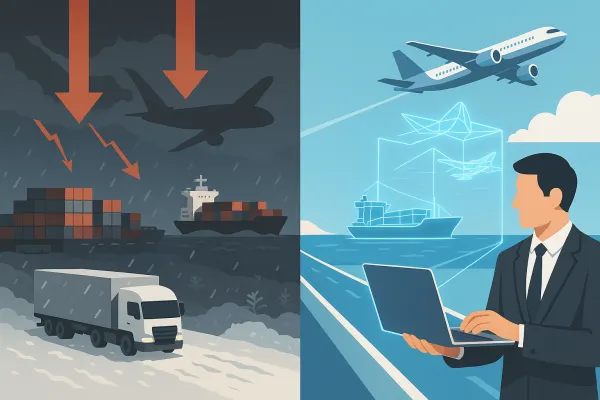
This failure pattern isn't isolated. According to the Standish Group's Annual CHAOS 2020 report, 66% of technology projects (based on the analysis of 50,000 projects globally) end in partial or total failure. Research from McKinsey in 2020 found that 17% of large IT projects go so badly, they threaten the very existence of the company. European shippers face even steeper odds due to cross-border complexities that don't exist in single-market implementations.
The stakes are higher for European companies because European shippers don't just need software that works—they need systems that handle 27 different VAT rates, multiple languages, varying carrier integration protocols, and soon, eFTI regulation compliance. The European transportation management systems market, valued at USD 2.70 billion in 2022, is growing at 12.1% annually and forecasted to reach €2.1 billion in 2028, yet over 60% of companies still operate on-premise systems. This creates urgent migration pressure at a time when the margin for error has never been smaller.
Europe-Specific Risk Factors That Derail TMS Projects
Implementing a TMS in Germany is different from implementing one in Germany, France, Poland, and the Netherlands simultaneously. European TMS migrations face unique challenges that North American implementations simply don't encounter.
The first major risk factor involves regulatory complexity. The eFTI Regulation is set to transform freight transport within the EU by boosting efforts to replace paper-based documentation with electronic data in all transport modes. As of 9 July 2027: The eFTI Regulation will apply in full. Member State authorities must accept information shared electronically by operators via certified eFTI platforms. Many TMS implementations fail because they can't address these compliance requirements.
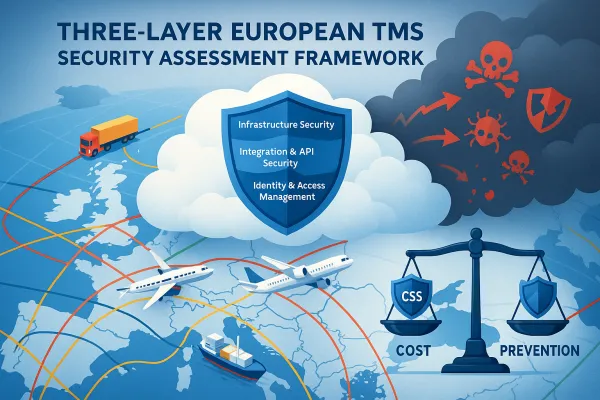
Data residency and GDPR compliance create additional complexity layers. Getting all this data to play nicely together across different European subsidiaries, currencies, and languages isn't straightforward. Your Polish subsidiary processes data differently than your German headquarters, and your TMS needs to accommodate both approaches while maintaining compliance.
European shippers also deal with carrier networks that span everything from large multinational logistics companies to regional specialists who still fax rate sheets. Your TMS needs to handle API integrations with DHL and manual data entry for that crucial last-mile provider in rural Italy.
The integration challenge compounds because Transporeon's integration requirements differ from nShift's, which differ from what smaller regional TMS providers like Cargoson offer. Each system handles multi-country operations differently. Some excel at European cross-border scenarios, others are better suited for single-market operations.
The Pre-Implementation Risk Assessment Matrix
European TMS implementations often fail because companies don't map out how their data flows between countries, subsidiaries, and systems. The implementation of a management process, however, is shown to reduce the failure rate to 20% or below. These companies succeeded because they followed disciplined implementation processes designed for European complexity, not generic software deployment methods.
Your risk assessment needs to start with carrier connectivity auditing. Cargoson offers direct API/EDI integrations with carriers across all transport modes, while Transporeon connects 150,000+ carriers but many integrations are standard EDIs or PDF/email transmissions rather than true API connections. Document exactly which carriers you work with and their integration capabilities before selecting any TMS vendor.
Next, assess data quality across your European operations. Your existing ERP knows about your suppliers in Munich and Milan. Your warehouse management system tracks inventory across locations. Your legacy TMS has years of carrier performance data. Map these data sources and identify compatibility requirements.
Evaluate regulatory compliance requirements by country. Different European markets have varying documentation, reporting, and tax calculation requirements. Your TMS selection needs to accommodate these differences without extensive customization.
Critical Integration Points That Make or Break European Deployments
Integration challenges compound the problem. To own a holistic TMS requires a long and expensive integration and customization process which makes TMSs not affordable by SMEs who generally lack resources for it.
TMS integrates seamlessly with other supply chain technologies like Warehouse Management Systems (WMS) and Enterprise Resource Planning (ERP) solutions, creating a holistic view of logistics operations. However, this seamless integration requires planning for European-specific complexities.
The most critical integration point involves ERP connectivity across multiple European subsidiaries. Each country's subsidiary likely runs different ERP configurations, chart of accounts structures, and reporting requirements. Your TMS needs to accommodate these variations while maintaining centralized visibility.
Carrier integration failures cause the majority of European TMS project delays. Cloud-native systems are architected for API-first integration, enabling seamless connections with electronic logging devices, accounting software, fuel card systems, and shipper portals. This integration capability eliminates costly middleware requirements that traditional systems demand.
The regulatory compliance integration layer often gets overlooked during vendor evaluation. Your TMS needs to connect with customs systems, tax calculation engines, and emerging regulatory platforms like eFTI-certified solutions.
The Phased Migration Strategy That Reduces Risk by 60%
By consolidating on a solution designed for European cross-border transportation, they eliminated data integration issues that had plagued their previous setup. Their implementation took eight months but delivered immediate ROI through better carrier rate optimization across their European network.
The most successful European TMS migrations follow a country-by-country rollout approach. Start with your most straightforward market - typically your headquarters country where you have the strongest operational control and user adoption capabilities.
Establish parallel processing capabilities during transition periods. Cloud solutions typically achieve these savings within 3-6 months, while on-premise implementations often require 12-18 months to show meaningful returns. This timing difference makes cloud-based solutions particularly attractive for phased European rollouts.
Focus on major lanes first within each country deployment. Rather than attempting comprehensive coverage immediately, identify your highest-volume routes and most strategic carriers for initial integration. This approach allows you to demonstrate ROI while building operational confidence.
Build systematic expansion methodology with clear success criteria for each phase. Document lessons learned from each country deployment to improve subsequent rollouts. What works in Germany might need modification for Italy or Poland.
Implement rollback procedures for each phase. Unlike single-country deployments, European implementations need country-specific rollback capabilities. You can't afford to disrupt operations in France because of issues with your Italian deployment.
Red Flag Warning Signs During Vendor Selection
The German automotive manufacturer's €800,000 failure started during vendor selection. The vendor selection mistake happens when companies don't properly weight European-specific requirements during evaluation. A TMS that scores highest on general functionality might rank lowest on European compliance.
Watch for vendors who can't provide detailed European carrier relationship documentation. MercuryGate excels in North America but might not have the European carrier network coverage you need. Alpega has strong European market presence but might be overkill for a mid-sized operation. Newer European-focused solutions like Cargoson are built specifically for cross-border European operations, while established players like Descartes have been adapting their global solutions for European complexities.
Red flag: vendors who can't demonstrate live API connections with your top 10 European carriers. Many vendors claim carrier connectivity but provide only basic EDI or email-based integrations for European markets.
Be suspicious of unclear cost breakdowns for European deployment. Licensed TMS software runs $50,000-$400,000+ with annual maintenance charges ranging from 15-20% of license costs. For a 100-truck operation, that initial $100,000 investment becomes $200,000+ in the first year when you factor in implementation, training, and infrastructure requirements. European deployments typically cost 40-60% more than single-country implementations due to complexity.
Missing compliance features represent major risk factors. If vendors can't clearly explain their approach to eFTI compliance, GDPR requirements, or multi-country tax calculations, they're not ready for European deployment.
Limited regional references should trigger concern. Vendors with strong North American track records but few European success stories often underestimate cross-border complexity.
The Recovery Plan: What to Do When Your TMS Implementation Goes Wrong
When your European TMS migration starts failing, speed matters more than perfection. Establish parallel system operation immediately to maintain business continuity across all affected countries.
Implement emergency rollback procedures on a country-by-country basis. Unlike single-market failures, European TMS problems often require selective rollback - you might need to revert operations in Poland while maintaining the new system in Germany.
Activate vendor escalation procedures with specific SLAs for European markets. Many global TMS vendors provide better support for North American implementations than European deployments. Demand European-based support teams and escalation paths.
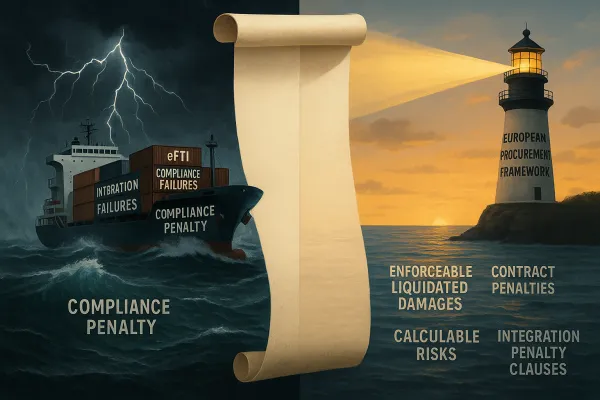
Consider cost recovery options through detailed contract review. Document all implementation delays, cost overruns, and functionality gaps. Many European TMS contracts include penalties for missed deployment milestones.
Compare that to successful cases we've seen from companies implementing solutions from Cargoson, Manhattan Active, or SAP TM. These vendors typically provide structured recovery support for failed implementations, including temporary parallel processing and phased migration from failing systems.
Establish temporary parallel processing for critical functions while resolving system issues. European operations can't afford extended downtime, so maintain legacy system capabilities for essential processes during recovery.
Focus on data preservation and extraction capabilities. European GDPR requirements mean you need clear data portability options if switching vendors becomes necessary. Document all data extraction procedures and ensure compliance with data residency requirements.
The key to avoiding these recovery scenarios lies in thorough pre-implementation risk assessment. The key factors in their success: realistic timeline expectations, extensive pre-implementation planning, European-experienced implementation teams, and treating the project as a business transformation requiring change management across multiple countries and cultures. European TMS implementations don't have to join the 40% failure rate. Companies that understand the unique challenges, plan appropriately, select the right solution can avoid the €800,000+ mistakes that derail so many European TMS migrations.