TMS Pricing Evolution 2025: Why Per-Shipment Models Are Failing European Procurement Teams (And What Smart Buyers Are Choosing Instead)

A German automotive parts manufacturer discovered their €800,000 TMS miscalculation the hard way. Six months into a North American platform deployment, they found their European carriers couldn't integrate without costly custom development. Now they're facing a complete re-implementation while competitors leverage pricing advantages they missed.
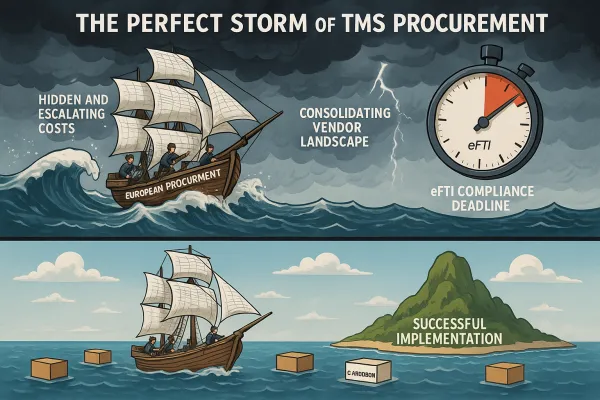
European procurement teams handling transport management system pricing models face a brutal reality: the familiar per-shipment model that seemed straightforward in 2023 has evolved into a cost trap that's catching even seasoned buyers off guard.
The Per-Shipment Pricing Trap Costing European Companies €500K+ Annually
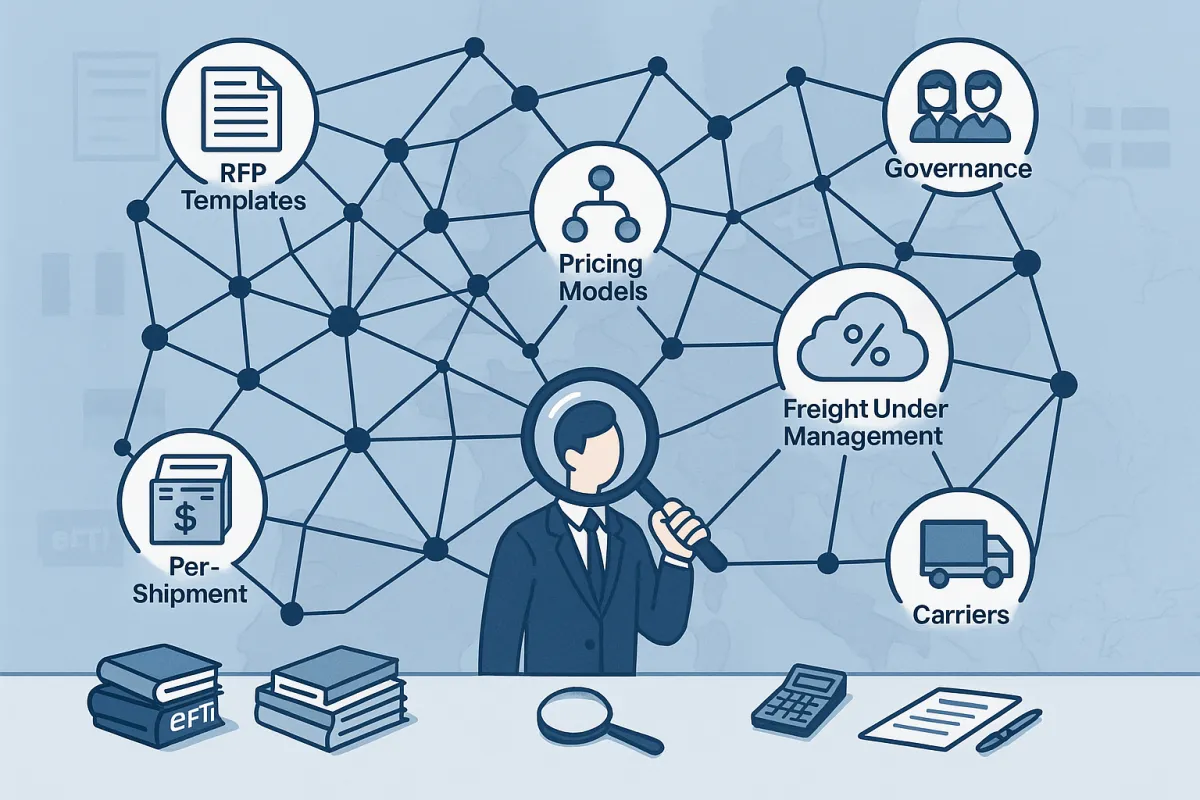
European manufacturers thought they understood TMS pricing when costs ranged $1.00 to $4.00 per freight load. But what procurement teams missed was the document multiplier effect. A single shipment often triggers several or dozens of messages and documents through EDI and API connectivity, drastically increasing total costs beyond initial projections.
Oracle TM and SAP TM struggle with pricing transparency precisely because they don't necessarily offer EDI/API connections with all carriers in all modes, requiring external connectivity at additional cost. Meanwhile, platforms like Cargoson focus on clearer European pricing structures that account for actual transaction volumes upfront.
A Belgian food distributor processing 15,000 annual shipments expected €45,000 in TMS costs based on €3 per shipment. They ended up paying €127,000 because each shipment generated an average of 8.3 data exchanges across their multi-carrier network. The pricing model worked against their operational reality.
The New Pricing Models Disrupting Traditional TMS Procurement in 2025
Cloud-based TMS solutions are moving away from per-user or transaction charges, instead charging as a percentage of Freight Under Management (FUM), allowing customers to fully use the TMS without artificial restraints. This shift fundamentally changes ROI calculations for European procurement teams.
Hybrid subscription-transaction models are gaining traction because most software providers use per-user pricing models with monthly fees ranging between $75 and $250 per person, with large organizations benefiting from volume-based pricing discounts. But the real innovation comes from vendors like MercuryGate, Descartes, nShift, and Cargoson who offer pricing models that align costs with actual freight spend rather than arbitrary transaction counts.
Shipper TMS costs now split into two main groups: implementation/training costs and transaction-based recurring costs. Smart procurement teams evaluate both simultaneously, not sequentially.
European Regulatory Impact: Why eFTI Compliance Changes Everything
The eFTI Regulation will apply in full as of 9 July 2027, creating a compliance argument that changes TMS procurement conversations entirely. Authorities in all EU Member States will be required to accept electronic data when shared by businesses via eFTI-compliant platforms.
Instead of viewing regulatory requirements as additional cost, frame them as competitive advantage. The European Commission estimates that the reduced administrative burden of using digital forms will save operators up to EUR 27 billion over the next 20 years.
Platform readiness varies significantly. Oracle TM and SAP TM are developing eFTI modules, while Transporeon emphasizes API connectivity for compliance data sharing. Cargoson focuses on cloud-native architecture that adapts quickly to new regulatory requirements. Choose based on your implementation timeline and compliance priorities.
The Procurement Framework for Evaluating 2025 TMS Pricing Models
European procurement teams need TCO calculation templates that include hidden costs. Basic API integrations typically cost between $5,000 and $15,000, while connecting with complex ERP systems might exceed $50,000. Factor these into your volume threshold analysis for switching between pricing models.
Blue Yonder, Manhattan Active, Cargoson, and traditional players each offer different approaches to total cost of ownership. Single-day training sessions start at $1,500, while complete onboarding packages range from $10,000 to $30,000. But training isn't the hidden cost—it's the ongoing support variations.
Market Consolidation Effect: How M&A Activity Changes Pricing Power
The TMS market just experienced its biggest consolidation shock. WiseTech Global's acquisition of E2open for $2.1 billion reshapes pricing negotiations for European buyers. Descartes' 32nd acquisition since 2016 shows the consolidation trend accelerating.
This consolidation blurs old boundaries between categories like TMS, GTM, planning, and fulfillment, redefining what it means to build a responsive supply chain network. For procurement teams, this means vendors have more pricing power but also more comprehensive solutions to justify it.
FreightPOP and Uber Freight acquisitions alongside Descartes acquiring 3GTMS for $115 million create a procurement environment where independent platforms become scarcer. Use this consolidation to negotiate multi-year agreements before your preferred vendor gets acquired.
The Smart Buyer's 2025 TMS Pricing Strategy
Contract negotiation tactics now center on protecting against pricing model changes. Most software providers using per-user pricing models with monthly fees ranging between $75 and $250 per person gives you negotiation benchmarks, but European buyers need protection against post-acquisition pricing increases.
Multi-year agreements in this volatile M&A market require termination clauses tied to ownership changes. A Dutch logistics manager locked in 36-month pricing with a vendor that got acquired 18 months later. The new owner honored existing contracts but renewal negotiations doubled their costs.
Solutions like ShippyPro, Shippo, and EasyPost work for parcel-focused operations, while enterprise platforms demand different strategies. Cargoson positions itself as the balanced option for European manufacturers who need enterprise capabilities without enterprise complexity.
Implementation Cost Reality Check: Beyond the Sticker Price
Basic API integrations typically cost between $5,000 and $15,000, while connecting with complex ERP systems might exceed $50,000. But European-specific integration challenges add complexity most pricing models ignore.
A French manufacturer spent €73,000 on "basic" integrations because their legacy WMS used proprietary standards incompatible with their TMS vendor's European API specifications. The vendor's North American clients use different integration patterns that didn't translate.
ShipStation and ShipEngine focus on standardized e-commerce integrations, while AfterShip emphasizes tracking APIs. Enterprise platforms require custom development for European regulatory data flows. Cargoson's European focus means pre-built integrations with common EU systems, reducing implementation surprises.
Smart European procurement teams now budget implementation costs at 150% of vendor estimates for non-European platforms, 120% for European-focused solutions. This margin accounts for regulatory compliance, multi-language support, and currency handling that vendors often underestimate.
The TMS pricing landscape changed dramatically in 2025. Per-shipment models that worked in simpler times now penalize operational efficiency. European buyers who understand Freight Under Management pricing, factor in eFTI compliance benefits, and negotiate protection against consolidation impacts will outperform competitors still fighting yesterday's procurement battles.
Your next TMS decision needs to account for July 2027 eFTI requirements, market consolidation risks, and pricing models that align with actual freight volumes. The companies that get this right will have competitive advantages that compound over years. The ones that don't will face the automotive parts manufacturer's €800,000 lesson.